Table textiles · A practical guide
Napkin Edges Explained: Hemmed, Mitered, and Fringed Finishes
A napkin’s edge is a small detail with an outsized effect. It shapes the way cloth falls across a lap, frames a place setting, and stands up to the rituals of washing and reuse. From the crisp line of a narrow hem to the easy irregularity of fringe, each finish brings its own balance of polish, texture, and practicality.
Published October 26, 2026
The finish is part of the design
When choosing table linens, it is natural to begin with color, fiber, or pattern. Yet the perimeter of a napkin quietly determines much of its character. A carefully finished edge can make even a plain piece of linen feel considered; a soft fringe can give a table a more relaxed, tactile mood. Construction also matters after the meal is over. Edges are exposed to handling, laundering, and repeated folding, so the way they are made influences how a napkin behaves over time.
Three finishes appear especially often: the straightforward hem, the tailored mitered corner, and the intentionally fringed edge. They are not simply decorative alternatives. Each has a different construction, appearance, and relationship to care. Understanding those distinctions makes it easier to choose table textiles suited to a weekday lunch, a celebratory dinner, or a collection intended to move easily between the two.
There is no universally correct finish. The best choice depends on the fabric, the desired level of formality, how often the napkins will be used, and whether their care instructions fit your household routine. A thoughtfully chosen edge makes practical sense—and gives the table a subtle sense of composition.
Hemmed edges: clean, enduring, and versatile
A hem is a folded and secured fabric edge. The raw cut edge is turned under—often once and then again—to enclose the loose threads, and the fold is stitched in place. This creates a finished border that is tidy and uncomplicated. Depending on the fabric and design, the stitching may be discreet or visible, and the hem may be narrow or more substantial.
Its appeal lies in its adaptability. A narrow hem gives a napkin a clean outline without drawing attention away from the cloth itself. It suits everyday settings, where washable utility is welcome, and formal tables, where a simple edge allows the weave, color, or embroidery to take the lead. On a smooth cotton or a softly textured linen, a hem can look crisp without feeling severe.
Hemming also helps contain fraying by enclosing the cut edge. That does not make a napkin indestructible: stitches can loosen, and fabric can wear with frequent use. But a well-made hem provides a practical, familiar finish. Look for even stitching and a fold that lies flat rather than twisting or puckering. If the napkin is made from a heavier cloth, the proportions of the hem matter; a very deep fold may add stiffness, while an extremely narrow one can be less forgiving in some fabrics.
For routine use, a hemmed napkin is often an easy choice because its appearance is restrained and its care is usually straightforward. Follow the maker’s instructions, particularly for washing temperature, drying, and ironing. Natural fibers may crease, shrink, or change in feel depending on how they are treated, while dyes and special finishes can have their own requirements. Gentle handling and avoiding excessive heat can help preserve the edge and the fabric around it.
At a table, hemmed napkins are natural companions to both casual and tailored settings. Fold them simply beside a plate, place them beneath cutlery, or let them sit loosely in a napkin ring. Their quiet outline offers the flexibility to change the mood with glassware, ceramics, or a seasonal centerpiece rather than requiring the linen itself to make a statement.
Mitered corners: a tailored turn
A mitered corner is a neat, diagonal join that lets a hem turn around a corner without gathering into a bulky overlap. Rather than folding one side over the other in a simple stack, the fabric is shaped and stitched so the hem meets at an angle, commonly around 45 degrees. The result is a corner that lies flatter and appears especially precise.
The distinction is easiest to see where two finished edges meet. A basic turned hem can create a thicker spot at each corner. In a miter, the meeting point is arranged more deliberately, reducing that visible buildup and giving the napkin a crisp, architectural outline. It is a small tailoring detail, but one that becomes noticeable on a carefully set table or on a napkin with a border that needs to continue cleanly around the perimeter.
Mitered corners are often associated with a refined, formal finish, though they can be just as appropriate for everyday linens. Their geometry works particularly well on square or rectangular napkins, where the corners remain visible when the cloth is folded or placed beside a plate. On a striped or bordered fabric, the miter can make the construction feel especially considered. On a plain cloth, it lends definition without adding ornament.
Because the finish involves more precise folding and stitching, the quality of execution matters. Check that the diagonal seam is secure, the corner lies flat, and the two sides meet cleanly. A badly formed miter may pull, pucker, or sit awkwardly; a well-made one should feel smooth rather than stiff. As with any textile, the fabric itself contributes to the result. Fine, soft cloth folds differently from a dense or heavy weave, so the same edge treatment may not look identical from one napkin to another.
Care is not necessarily complicated, but corners deserve a little attention. Before laundering, unfold napkins rather than leaving them tightly crumpled in a hamper. Use the care guidance supplied for the fabric, and avoid over-drying if it can leave the cloth unusually creased or make pressing more difficult. If ironing is recommended, working the corners flat can restore their clean shape. There is no need to press every napkin to a formal finish: a softer, lived-in appearance can be beautiful, too.
For a dinner where the place setting is intentionally composed, mitered edges offer a quiet form of precision. They pair well with simple dinnerware, polished cutlery, and understated centerpieces because the craftsmanship is present without being showy. They also make a practical choice for anyone who appreciates a crisp finish but does not want decorative trim or fringe.
Fringed napkins: texture with a relaxed edge
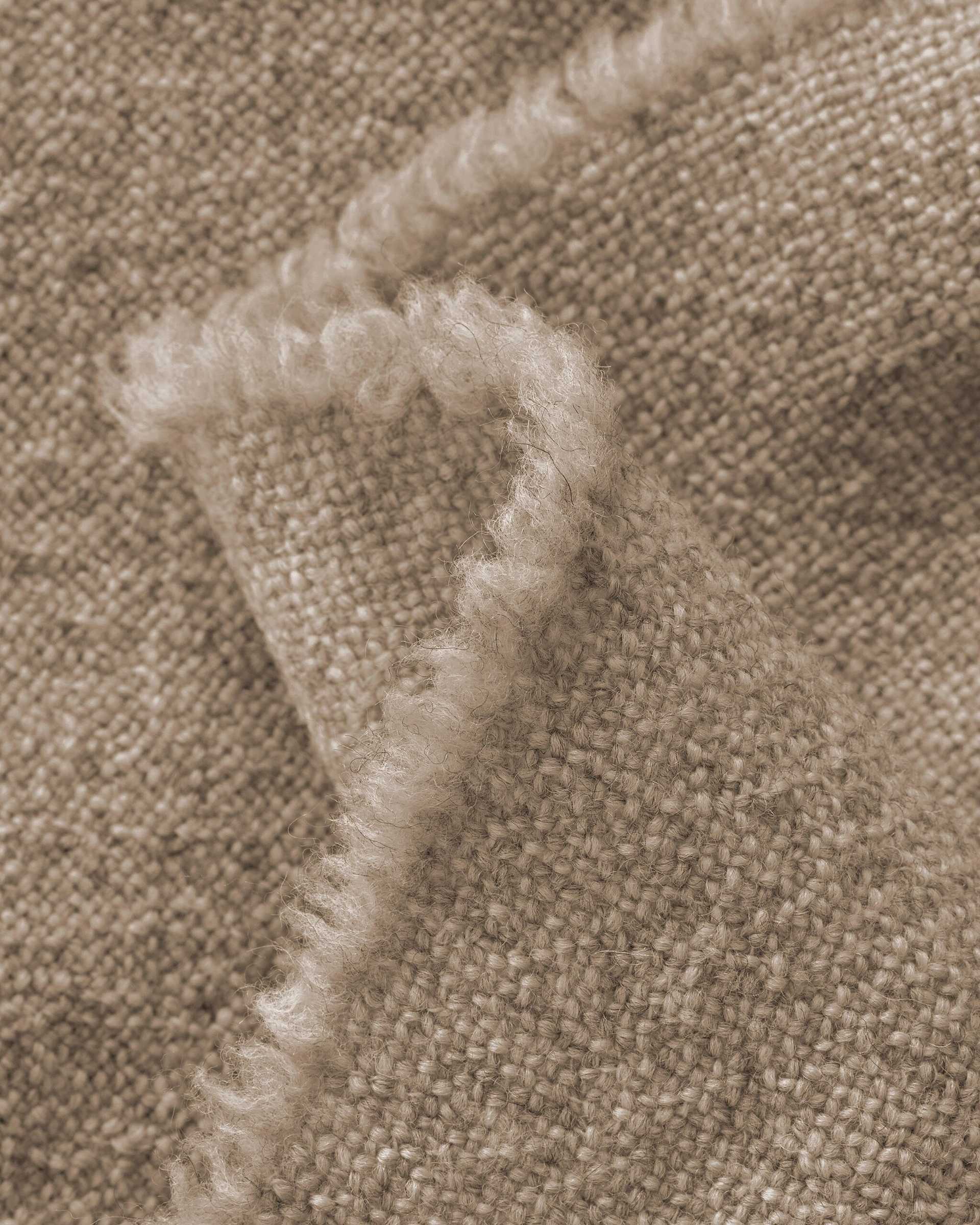
Fringe leaves a border of loose threads rather than folding the edge into a conventional hem. In many woven textiles, threads are carefully drawn out in a controlled width, leaving the remaining crosswise threads exposed as a fringe. Some napkins are finished with stitching or another stabilizing detail just inside the fringe to help prevent it from unraveling farther. Construction varies, so the appearance and care needs of fringed pieces are not all the same.
The effect is tactile and informal. Fringe softens the outline of a napkin, bringing movement and a hand-finished note to the table. It can complement rustic ceramics, relaxed entertaining, and natural-fiber cloths, but it need not feel casual in a narrow sense. In a restrained color palette, a fine, even fringe can be elegant. The key is proportion: a subtle border reads differently from a long, abundant fringe, and each creates its own visual rhythm.
Because the edge is intentionally open, fringed napkins may need more attention during washing and drying. Loose threads can tangle, shed, or become uneven, especially when mixed with garments that have hooks or zippers. Check the maker’s care instructions before laundering. When appropriate, washing similar textiles together, using a gentle cycle, and avoiding harsh agitation can help keep the fringe orderly. A mesh laundry bag may be useful for particularly delicate pieces if the care guidance allows it.
It is normal for some woven fabrics to show modest variation, and a handmade or artisanal appearance may include small irregularities. That is different from uncontrolled unraveling. Inspect the stitching or finished line that secures the fringe: if threads continue to pull well beyond the intended border, the edge may need repair or gentler handling. After washing, reshape the napkin and smooth the fringe while it is damp if the textile’s instructions permit. Avoid pulling sharply on individual threads.
Fringe also changes how a napkin sits. Its loose edge can soften a formal place setting, add a layer of texture to a plain tablecloth, or bring warmth to a simple meal. It is particularly effective when repeated elsewhere in the setting—perhaps through a woven placemat or a textured runner—although restraint keeps the table from feeling busy. Let the napkin’s edge be the detail that catches the eye, rather than competing with several decorative borders at once.
How the three finishes compare
A hem offers a dependable, clean finish with broad stylistic range. A miter is a more tailored version of that neat outline, distinguished by the way its corners meet. Fringe has a looser, more tactile character, with the finished border left visible rather than folded away. Each can be beautifully made; none is automatically more durable or more luxurious simply because of its name.
- Choose a hem for a versatile, understated edge that suits frequent use and a wide range of table styles.
- Choose a mitered corner when a crisp, precise finish matters, especially on square napkins or fabrics with a visible border.
- Choose fringe when texture and a relaxed, natural mood are part of the appeal, and you are comfortable following any extra care guidance.
Construction is only one part of the decision. Fiber content, weave, fabric weight, dye, and finishing all influence the feel and performance of table textiles. A lightweight cloth may drape softly but require gentler handling; a heavier weave may feel substantial yet need more room to dry. Labels and product descriptions are useful starting points, but they are not substitutes for the specific care instructions that accompany an item.
Choose for the way you set the table
Begin with the occasions on which the napkins will be used. For daily meals, prioritize a fabric and edge that fit regular laundering. If you entertain often, consider whether the finish remains attractive after repeated cycles and whether it can be pressed or reshaped without too much effort. For special gatherings, the edge can help establish the atmosphere: mitered corners feel composed, while fringe introduces a softer note.
Think about the rest of the table, too. A patterned cloth may benefit from a simple hem that does not compete for attention. A plain table can welcome the texture of fringe or the precision of a miter. If napkins will be folded into elaborate shapes, a smooth, stable edge may be easier to work with. If they will be loosely draped or placed in rings, a more relaxed finish may feel right.
Dimensions matter as well. A larger napkin may be folded in ways that reveal the corners and perimeter more prominently; a smaller one may keep the edge in the background. Consider how the napkin feels in the hand and how it falls across a lap, not only how it looks in a product listing. The character of woven cloth is often best understood through its texture and drape as much as its color.
Finally, be precise about what a product description means by “fringed,” “hemmed,” or “mitered.” The exact construction can vary by maker, and terms do not always tell you whether stitching is visible, how wide a border is, or how the fabric has been stabilized. Look for close descriptions of the finish and clear care instructions. If an important detail is not specified, seek clarification before making a choice.
Care that preserves the edge
Good textile care begins with the label. Washing temperatures and drying methods should reflect the fiber and finish, not a blanket rule applied to every napkin. Use a suitable detergent, avoid bleach unless the instructions explicitly allow it, and do not overload the machine. Crowding can increase friction and make it harder for linens to rinse and move freely.
Separate napkins from items likely to snag them. Hooks, rough fasteners, and loose zippers can catch both stitches and fringe. Treat spills promptly according to the fabric’s care guidance, and avoid aggressive scrubbing at the edge, where repeated friction can distort the weave. If a napkin is stained, a suitable pre-treatment may be preferable to a forceful wash, but test cautiously and follow the manufacturer’s advice.
Drying deserves equal consideration. Over-drying can set creases and make some natural fabrics feel harsher. If line drying is suitable, smooth the napkin into shape and pay attention to the corners and any fringe. If tumble drying is permitted, use the recommended setting. Pressing is a matter of preference as well as finish: a crisp table may call for ironing, while a relaxed linen setting can look appealing with gentle, natural creasing.
Store napkins fully dry in a clean, well-ventilated place. Fold them neatly without forcing a fragile corner into a sharp crease, and keep fringed edges from being compressed beneath heavy objects. Small habits—unfolding cloth promptly after a meal, checking for loose threads, and following care directions—can help a favorite set retain its character over time.
A final detail, considered well
Napkin edges are among the smallest decisions in a table setting, yet they have an unmistakable effect. A hem gives a calm, practical outline. A mitered corner brings tailored precision. Fringe offers texture and a graceful informality. Each finish speaks in a different register, and each can be right when its construction, fabric, and care routine suit the way the napkins will be used.
Rather than choosing by appearance alone, consider how the edge will look after many meals and many washes. A beautiful table textile is not only pleasing on the day it arrives; it should also feel natural to use, maintain, and bring back to the table. When finish and routine are in balance, even a simple napkin can make an everyday meal feel quietly intentional.
Frequently asked questions
Are mitered corners more durable than standard hems?
A well-made miter can lie flatter and reduce bulk at the corners, but durability depends on the fabric, stitching, and care as well as the construction. Inspect the seams and follow the item’s laundry instructions.
Do fringed napkins unravel in the wash?
Some loose threads or modest changes in the fringe may occur, depending on how the edge is constructed. Gentle laundering and avoiding snagging can help. Follow the specific care guidance, and distinguish normal variation from threads pulling beyond the intended fringe.
Which napkin edge is best for everyday use?
A hem is a versatile option for frequent use, while a mitered finish can offer a similarly polished look. Fringe can also work for everyday meals when its care requirements suit your routine. The best choice is the one that feels appealing and practical in your home.